The 4th of July is a blast for us, though let’s be honest—for our animal companions, it’s usually the most stressful night of the year. Between the backyard barbecues and the community gatherings, our homes and barns get noisy. For our companion animals, the holiday is a massive sensory and energetic overload.
As an animal communicator, I look at this holiday directly from the animal’s perspective. To keep them safe, we have to move past the human idea of “it’s just some loud noises” and look at what’s actually happening to their senses and their energy fields.
Here is a practical, no-nonsense guide to what your dogs, cats, birds, and horses are going through, along with exactly how to set up your home and barn to keep them secure and calm.
1. What Your Animal Companions Are Actually Experiencing
Animals have incredibly sharp senses. What looks like a cool light show to us feels like an immediate environmental threat to them.
- Dogs (The Vibrations and the Noise): Dogs don’t just hear fireworks; they physically feel them. Their hearing is incredibly sensitive, picking up high-frequency sounds that we can’t even detect. When a firework goes off, the low-frequency acoustic wave actually vibrates through the ground and right into their chest cavity. Because these booms are totally unpredictable, your dog’s brain instantly flips into fight-or-flight mode.
- Cats (Territorial Threat and Light Flashes): Cats are all about territory. They feel safe when their home smells familiar and predictable. The sharp, acrid smell of sulfur and smoke filtering in from outside totally disrupts their space. Combine that weird smell with blinding flashes of light cutting through the windows and random thuds, and your cat’s instincts tell them to bolt and find the deepest, darkest hiding spot possible.
- Birds (The Primal Panic of a Prey Animal): Birds are prey animals. In the wild, sudden loud noises and flashing lights above them mean one thing: a predator is attacking. A caged bird can’t fly away to escape, which can trigger a severe state of panic known as a “night fright.” When this happens, birds will frantically thrash their wings against the cage bars, which can cause serious injuries.
- Horses (The Herd Panic and Acute Vibrations): Like birds, horses are prey animals, but they possess a massive flight response. To a horse, a firework explosion feels like an incoming predator attack. Because they are hyper-tuned to changes in barometric pressure and seismic vibrations, they feel the concussive force of fireworks deep in their hooves and skeleton. If a single horse in a pasture or barn panics, the collective herd mentality triggers, causing a blind stampede that can lead to fence crashes or severe stress-induced colic.
2. Reading the Room: Subtle Signs of Stress
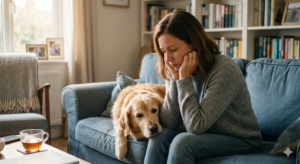
Some animals make their fear obvious by crying, pacing, or kicking stalls. But many suffer in silence. Keep an eye out for these subtle red flags so you can step in early:
- Dogs: Excessive yawning, lip-licking (when food isn’t around), dilated pupils, panting while lying down, or hyper-vigilantly scanning the room.
- Cats: Crouching flat to the ground, ears turned out like “airplane wings,” twitching skin along their spine, or refusing to eat.
- Birds: Rapid, shallow chest breathing, feathers slicked tight to their body (making them look unusually thin), open-beak panting, or gripping their perch like a vise.
- Horses: Rigid posture, flared nostrils, hyper-alert ear pinning, pinning themselves to the back of the stall, excessive sweating (unrelated to the weather), constant pacing, or frequent, anxious yawning.
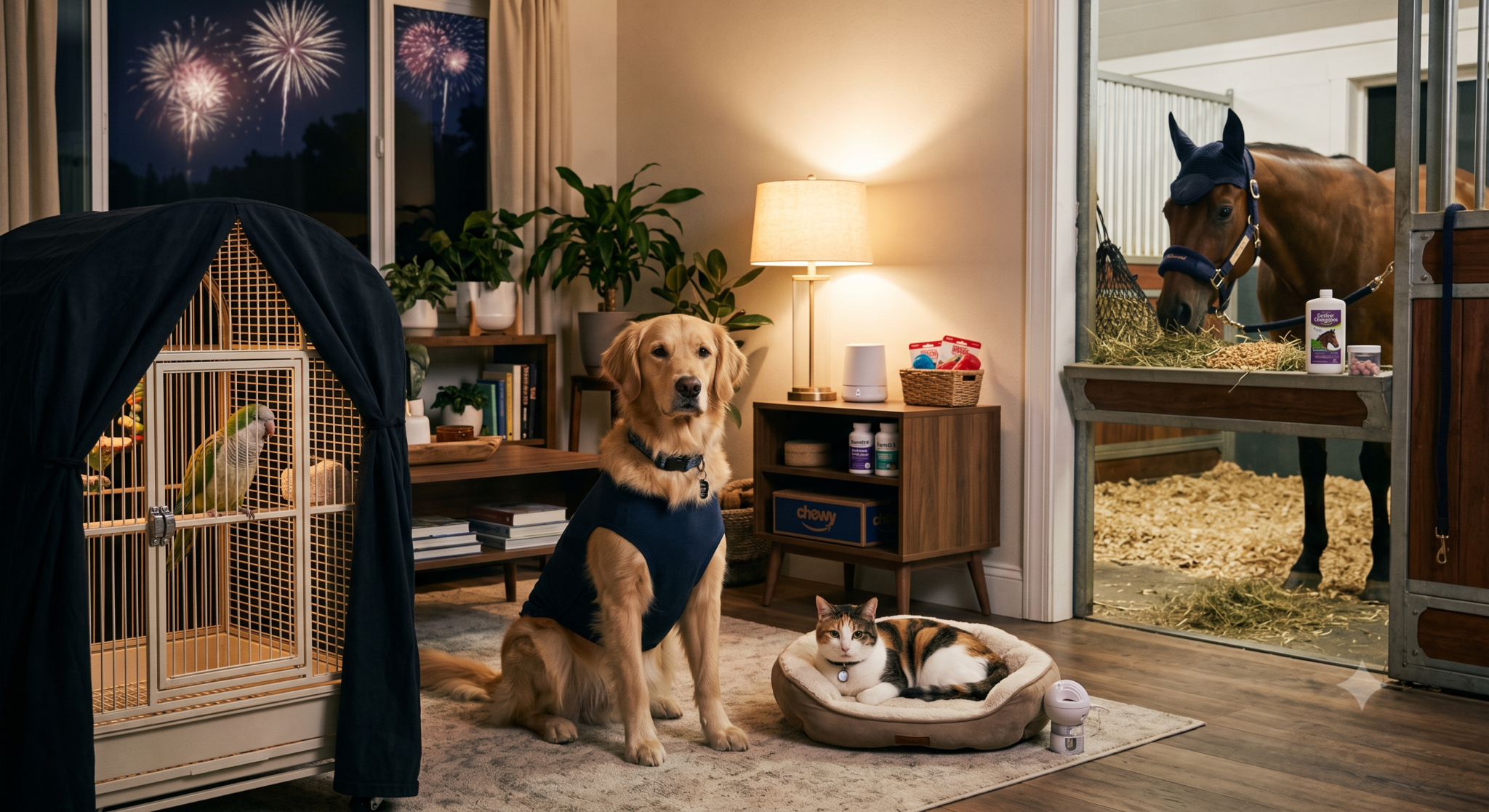
3. Your Multi-Species Game Plan & Gear Guide
To handle a property with different types of animals, you need a solid setup. Here is how to prep the environment for each species before the sun goes down.
The Dog Protocol: Build a Fortress
Your main goal with dogs is to dull the sound and the physical vibrations.
- Pick an Interior Room: Move your dog to a room with the fewest windows—like a basement, a large walk-in closet, or a bathroom.
- Muffle the Sound: If your dog loves their crate, drape a heavy blanket or a dense comforter completely over the top to create an acoustic shield.
- Drown Out the Booms: Standard TV volume usually isn’t enough because of the quiet pauses between scenes. Grab a dedicated white noise machine or a powerful box fan to create a steady wall of sound. I highly recommend checking out my [Amazon List: Calming Aids for Pets & Horses] for top-rated white noise machines, or browse my [Chewy Stroefront: Calming Aids for Pets & Horses] for specialized acoustic soundtracks designed just for canine ears.
- The High-Value Distraction: Give them something to do before the noise starts. Licking and keeping their minds busy naturally lowers a pet’s heart rate. Grab a classic lick mat or puzzle toy, put it with peanut butter, and freeze it ahead of time. You can find my favorite durable items on my [Chewy Stroefront: Calming Aids for Pets & Horses].
The Cat Protocol: Respect the Hide
Cats don’t want a ton of attention when they’re scared; they just want to be invisible.
- Let Them Hide: If your cat wedges themselves under the bed or behind the clothes in the closet, leave them be. Trying to drag them out to cuddle will only spike their stress (and might get you scratched).
- Lock the Perimeter Early: Panicked cats can slip through incredibly small gaps. Lock all windows, doors, and cat flaps by late afternoon.
- Bring the Comfort to Them: Move an extra litter box, water, and food closer to their favorite hiding spot so they don’t have to brave an open living room to get a drink. To help take the edge off their anxiety, consider using a calming pheromone diffuser. I’ve linked the ones I use and trust in my [Amazon List: Calming Aids for Pets & Horses].
The Avian Protocol: Stop the Night Frights
Birds need zero visual reminders of what’s happening outside.
- Move the Cage: Move your bird’s cage away from exterior walls and windows into a quiet, central room.
- Block the Lights: Cover the cage with a dark, breathable sheet as dusk approaches to block out the sudden flashes of light.
- Leave a Light On: Don’t leave the room pitch black. Keep a lamp or a nightlight on in the room outside the sheet. If a massive boom does startle your bird, the faint ambient light filtering through the fabric helps them instantly see their perch so they don’t wildly thrash around.
The Equine Protocol: Stall, Soften & Shield
Managing horses requires managing their space and dampening their acute hearing.
- To Stall or Pasture? This depends entirely on your horse. Safe, familiar stalls with high walls can prevent them from running blindly. However, if your horse suffers from severe claustrophobia when panicked, a safe pasture with secure, highly visible fencing might be better. Remove any sharp objects or tools from the aisleways and stalls ahead of time.
- Drown Out the Ambient Noise: Silence in a barn makes firework cracks sound terrifyingly sharp. Play classical music or a steady talk-radio station through a barn-safe, rugged sound system to mask the noise. Check out my [Amazon List: Calming Aids for Pets & Horses ] for durable, dust-proof Bluetooth barn speakers.
- Protect Their Sensitive Ears: I highly recommend using foam pom-pom style earplugs or a sound-dampening fly bonnet with padded ears to dull the concussive bangs. You can grab highly rated equine earplugs and soundproof bonnets on my [Chewy Stroefront: Calming Aids for Pets & Horses]
- Internal Support: Don’t wait until the fireworks start to give them relief. Loading up their system with targeted nutritional and flower essence support a few days in advance can keep their nervous system grounded. For the night of the 4th, keep fast-acting oral calming pastes on hand. My go-to daily formulas and emergency pastes are linked on my [Chewy Stroefront: Calming Aids for Pets & Horses].
4. The Energy Factor: Your Vibe Matters
As an animal communicator, I cannot emphasize this enough: your animal companions mirror your nervous system.
When a big boom happens, and an animal starts shaking or pacing, our human instinct is to rush over, scoop them up, or fuss over them while saying in a worried voice, “Oh my gosh, it’s okay, don’t be scared!”
But animals don’t translate English words; they translate your energy. When you freak out and project worry, they think: “Wow, my human is panicked too. We really are in danger.”
How to Stay Grounded
- Take a Breath: When you hear a loud firework, take a deep breath, drop your shoulders, and keep your muscles relaxed.
- Act Normal: Keep doing whatever you were doing. Read a book, fold laundry, or clean the tack room. Your normal routine tells them: “This noise outside doesn’t change a thing inside.”
- Use Mental Imagery: Sit near your animal companion without staring directly at them. Close your eyes, clear your mind of worry, and visualize a calm, solid, glowing shield around your home or barn. Send them a clear mental picture of safety and stillness. They pick up on that energetic shift faster than you think.
5. The Last-Minute Checklist
Before the festivities kick off, make sure you’ve crossed these logistics off your list:
- Check the Tags & Halters: Ensure collars and breakaway halters are in place, ID tags are clearly visible, readable, durable, and jingle-free.
- Update the Microchips: Double-check that your phone number is current with your animal’s microchip registry. July 5th is the busiest day of the year for animal shelters because so many panic and bolt.
- Exercise Early: Get your dogs out for a long walk and your horses turned out first thing in the morning while it’s totally quiet. Keep dogs on a leash all day—even in the yard.
- Feed Ahead of Time: Give your animals their dinner a few hours early. A heavily stressed animal will experience an upset stomach and refuse to eat once the fireworks start. Ensure horses have plenty of forage (like a slow-feed hay net) to keep them occupied through the night.
With a little preparation, a cozy setup, and a calm, cool attitude, you can help your dogs, cats, birds, and horses cruise right through the holiday.
Have a safe, peaceful Fourth of July! If you need to grab any last-minute gear to prep your home or barn, head over to my [Amazon List: Calming Aids for Pets & Horses], my [Chewy Stroefront: Calming Aids for Pets & Horses] to see exactly what I use for my own animals.