
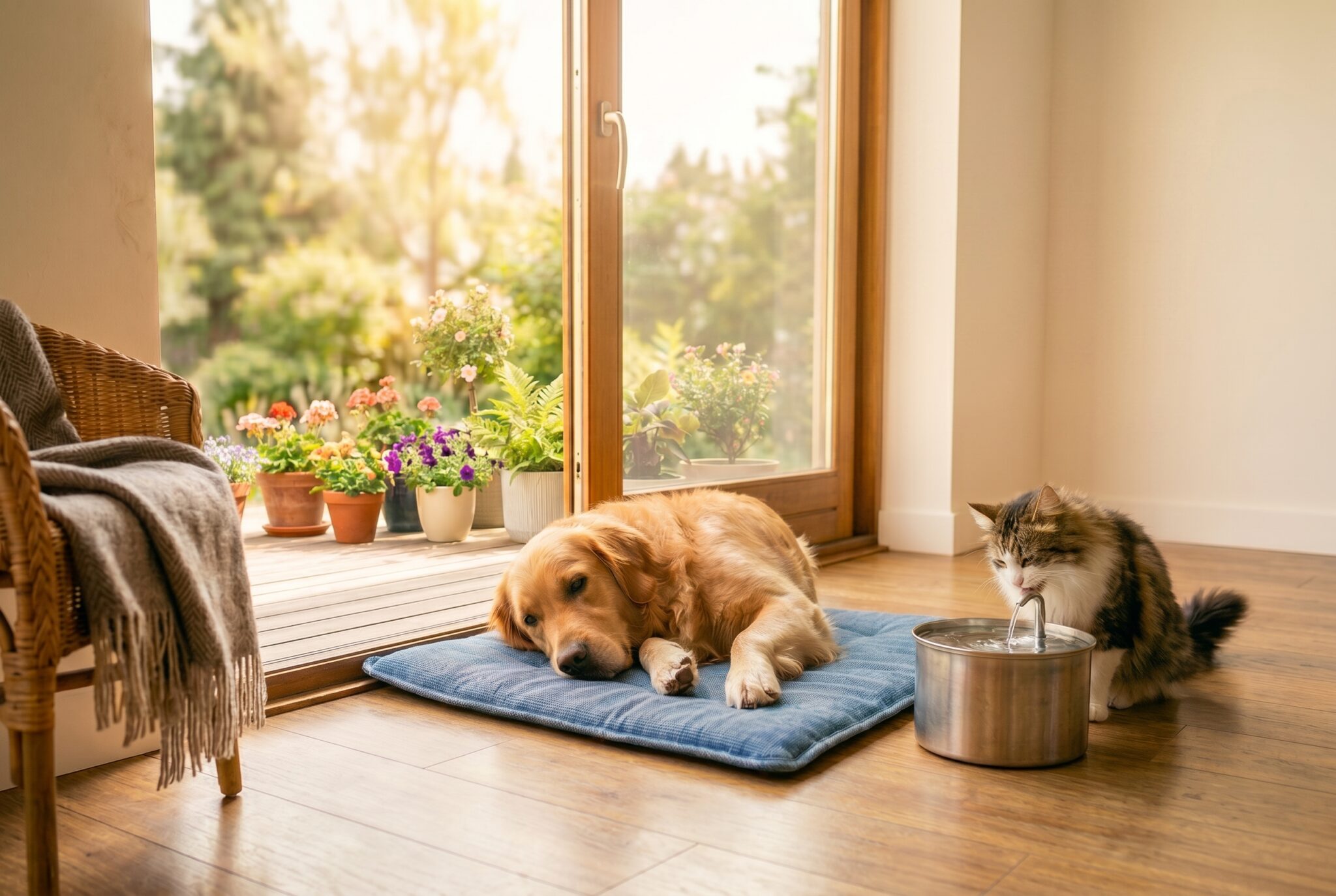
Summer brings longer days, sunny patio hangs, and outdoor adventures with our furry family members. But as temperatures rise, so does the risk of heat-related distress for our dogs and cats. We have all heard the standard safety warnings: keep water bowls full, stay off scorching asphalt, and never, ever leave a pet in a parked car. While those rules are essential, there is a much deeper layer to keeping our animals safe that often gets overlooked.
As an animal communicator, I work closely with the subtle energetic and empathic bond that connects us to our pets. Long before an animal exhibits obvious physical signs of heatstroke—such as frantic panting, bright red gums, or collapsing in the shade—they are actively attempting to communicate their discomfort. They project their physical state through subtle shifts in behavior, emotional signals, and intuitive mental pictures.
When you learn to combine your natural empathic awareness with practical heat-safety gear, you create an unbreakable safety net for your pet. In this comprehensive guide, we will explore how to read your pet’s subtle intuitive cues, how to prevent heat emergencies before they start, and the best cooling essentials to keep your fur baby happy and comfortable all summer long.
1. The Empathic Connection: How Animals Broadcast Discomfort
Animals do not experience the world through spoken language; they experience it through raw emotion, physical sensation, and energetic frequency. Because you share a deep bond with your dog or cat, you are already tuned into their frequency—even if you haven’t consciously realized it yet.
When an animal begins to feel the stress of rising ambient temperatures, their body undergoes rapid physiological changes. Their heart rate increases, their internal core temperature creeps up, and their nervous system enters a state of heightened alertness. Before these changes manifest as dramatic physical symptoms, your pet projects that internal pressure outward into your shared energetic space.
Being empathic means you have the ability to pick up on these energetic projections. Have you ever been out on a walk on a warm afternoon and suddenly felt a heavy wave of fatigue hit you out of nowhere? Or perhaps you were sitting on the couch and felt a sharp, unexplainable burst of anxiety? Often, these feelings do not originate from you at all—they are direct empathic impressions received from your animal.
2. Reading Your Pet’s Subtle Intuitive Signals
To catch heat distress in its earliest stages, you need to know what to look for beyond the physical surface. Here are four primary ways your pet communicates heat discomfort through your empathic connection:
The Sudden “Heavy” Energy Drop
You clip on the leash, grab your keys, and step out the front door for your usual afternoon loop. But before you even reach the end of the driveway, a sudden, heavy lethargy washes over you. Your legs feel like lead, and the thought of walking even two blocks feels overwhelming.
This rapid drop in energy is rarely just human laziness. It is often an empathic translation of your pet’s body state. Animals are masters of energy conservation. When the air is thick and hot, their instinct tells them to slow down immediately. By projecting that heavy feeling into your shared field, your pet is silently telling you: My body cannot handle this pace right now.
Telepathic Pictures & Flashes
Animals communicate heavily in mental imagery. When a pet is thirsty or overheated, they construct vivid internal pictures of what would bring their body back into balance.
As an empathic pet parent, you might suddenly receive a quick, unexpected visual in your mind’s eye—a picture of a cold tile floor, a streaming garden hose, an ice cube floating in a dish, or a deep pool of shade. If a random mental image of water or cool surfaces pops into your head out of nowhere while you are hanging out with your pet, do not dismiss it as your own imagination. It is very likely a telepathic image broadcast directly from your animal’s mind to yours.
The Lock-Eyes “Freeze”
Movement is one of the clearest forms of animal language. When a dog is feeling the early stages of heat fatigue on a walk, they will often execute the lock-eyes freeze. They will suddenly come to a complete stop, plant all four paws, turn their head, and lock eyes with you without making a sound.
This is not stubbornness, and they are not trying to be difficult. That direct, unwavering gaze is a focused transmission of intent. They are holding your attention to deliver a clear, non-verbal message: I have reached my thermal limit. We need to stop, find shade, or head home right now.
Uncharacteristic Moodiness & Irritability
Heat causes physical irritability in humans, and it does the same thing to animals. When a pet’s body is struggling to dump excess heat, their tolerance threshold plunges.
If your normally sweet, social dog suddenly growls when touched, or if your affectionate cat nips at your hand or retreats behind the couch on a hot afternoon, pay attention. This behavioral shift is an empathic flare-up. They are letting you know that their physical system is overwhelmed, and they need space, quiet, and a cooler environment to recover.
3. The 5-Second Empathic Check-In Before Walks
Building a daily habit of checking in with your pet before outdoor activities can prevent heat emergencies before you even step outside. You don’t need special training to do this—just a moment of quiet focus.
Here is a simple, 3-step grounding practice you can use every single day:
- Pause at the Door: Before turning the doorknob, take one deep breath. Drop your shoulders, release any rush or agenda in your mind, and bring your focus completely into the present moment.
- Ask Silently: Look at your pet or hold their leash, and ask them silently in your mind: “How does your body feel about going for a walk right now?”
- Trust the First Impression: Notice the very first feeling, image, or instinct that pops into your awareness within two seconds.
- If you feel lightness, eagerness, or a clear “yes,” you are good to go!
- If you feel a sudden heavy weight in your chest, a quick flash of a sleeping dog, or a gut sense of “nope,” trust that empathic hit.
If your pet signals that it’s too hot, honor their message! Unclip the leash, skip the pavement walk, and transition to indoor mental games or a cool backyard splash session instead.
4. Essential Physical Heat Safety Rules Every Pet Owner Must Know
While tuning into your empathic connection provides early warnings, you must also back that intuition up with solid, practical heat safety precautions. Dogs and cats do not sweat through their skin the way humans do; dogs rely primarily on panting and minimal sweating through their paw pads, while cats groom themselves to allow saliva evaporation to cool their skin. This makes them significantly more vulnerable to heatstroke.
The 5-Second Paw Test for Asphalt
Asphalt and concrete trap heat throughout the day, reaching temperatures far higher than the surrounding air. On a sunny 85°F day, asphalt can easily heat up to 125°F or higher—hot enough to cause severe, painful burns to delicate paw pads in less than a minute.
Always perform the 5-Second Test before letting your dog walk on paved surfaces:
- Place the back of your bare hand flat against the pavement.
- Hold it there for 5 full seconds.
- If it feels uncomfortably hot to your hand, it is far too hot for your pet’s paws. Stick to grassy, shaded areas or walk during the early morning hours.
The Physics of Hot Cars
It cannot be overstated: never leave a pet inside a parked car on a warm day, even for a quick two-minute errand, and even with the windows cracked.
A parked car acts like a solar oven. When the outside temperature is 80°F, the inside of a car can reach 99°F in just 10 minutes. Within 30 minutes, it can spike to a deadly 120°F. Cracking the windows does almost nothing to stop this rapid temperature build-up. Leave your pets safely at home in the air conditioning when running errands.
High-Risk Pets Requiring Extra Vigilance
Certain pets have a much lower tolerance for warm weather and require heightened monitoring:
- Brachycephalic Breeds: Flat-faced breeds like Bulldogs, Pugs, Boxers, French Bulldogs, and Persian cats have compressed airways that make efficient panting nearly impossible.
- Senior Pets & Puppies: Aging organ systems and underdeveloped thermoregulation mechanisms make young and old animals highly susceptible to rapid heat stress.
- Overweight or Heavy-Coated Pets: Excess weight acts as an insulating blanket, trapping core body heat and straining the cardiovascular system.
5. Recognizing Heat Exhaustion vs. Heatstroke
Knowing the physical progression of heat distress allows you to take swift, life-saving action if your pet ever gets too warm.
| Stage | Physical Symptoms | Immediate Action Required |
| Early Heat Stress | Heavy panting, seeking shade, minor fatigue, wide eyes, warm ears. | Move to air conditioning immediately; offer fresh cool water; rest. |
| Heat Exhaustion | Heavy drooling, bright red gums/tongue, weakness, refusal to walk, warm to touch. | Apply cool (not ice) water to belly, paws, and groin; use a fan; contact vet. |
| Severe Heatstroke | Pale or purple gums, vomiting, confusion, pinpoint pupil dilation, collapse, seizures. | Emergency Medical Crisis: Transport to emergency vet immediately while applying cool wet towels. |
Crucial Warning: Never plunge an overheated pet into an ice bath or pour freezing water over them. Extreme cold causes blood vessels near the skin to constrict instantly, trapping hot blood inside the body core and dangerously accelerating heatstroke. Always use room-temperature or cool water.
6. Indoor Cooling Enrichment & Hydration Boosters
When it is simply too hot to spend extended time outdoors, keeping your pet mentally stimulated and physically cool indoors is the key to a happy summer.
Frozen Lick Mats & Cold Enrichment
Licking triggers the release of endorphins in a pet’s brain, naturally lowering anxiety and heart rate. Combining licking with frozen ingredients creates an amazing cooling tool.
- Bone Broth Pupsicles: Pour pet-safe, low-sodium bone broth into silicone ice molds or fillable rubber toys and freeze overnight.
- Yogurt Lick Bowls: Spread plain, unsweetened Greek yogurt or pureed pumpkin across a textured silicone mat and freeze. It takes 20-30 minutes for them to lick it clean, cooling their core temperature from the inside out while providing great mental enrichment.
Hydration Hacks
Many pets—especially cats—do not drink enough standing water from traditional bowls. Boost their fluid intake with these tricks:
- Wet Food Toppers: Add a splash of warm water or bone broth to your dog or cat’s kibble to create a rich, hydrating gravy.
- Multiple Hydration Stations: Place water dishes in every major room of the house so your pet never has to travel far when feeling thirsty.
7. My Favorite Summer Cooling Essentials
Having the right gear on hand makes managing summer heat effortless. Here are the top cooling tools I regularly use and recommend to clients to keep pets comfortable all season long:
Gel Cooling Mats
These mats are absolute lifesavers because they require zero refrigeration, water, or electricity. They contain a non-toxic gel that automatically activates under the weight of your pet’s body, providing an instant surface temperature drop of 5 to 10 degrees. Place one in their favorite sunny nap spot or inside their crate for instant relief.
Pet Water Fountains
Animals in the wild are instinctively drawn to running water because it is fresher and cleaner than stagnant pools. A circulating pet water fountain keeps water filtered, oxygenated, and continuously moving, which encourages both dogs and cats to drink significantly more fluids throughout the day.
Elevated Mesh Pet Beds
Traditional plush dog beds trap body heat beneath your pet, making them uncomfortably warm on hot days. Elevated pet beds lift your animal several inches off the floor using a breathable, tight-mesh fabric. This allows cool air to flow freely beneath their body, eliminating heat traps during nap time.
Fillable Frozen Rubber Toys & Lick Mats
A durable rubber toy or a textured silicone lick mat is a must-have for indoor summer enrichment. Stuffing these toys with wet food, dog-safe peanut butter, or frozen broths creates a long-lasting, cooling activity that keeps your pet happily engaged indoors when it’s too hot to play fetch outside.
Soothing Paw Balms
Even if you are careful about avoiding hot pavement, warm sidewalks, sand, and rough terrain can still leave your pet’s paw pads dry, cracked, and tender. Keeping an all-natural, moisturizing paw balm nearby allows you to soothe and repair their feet after outdoor outings.
Portable Collapsible Dog Pools
If you have a yard or patio space, a heavy-duty, collapsible splash pool is the ultimate summer treat for water-loving dogs. Setting up a shaded splash zone lets your dog dip their paws and belly to regulate their core temperature safely during outdoor family time.
Final Thoughts: A Cooler, Happier Summer Together
Keeping your fur family safe during the hottest months of the year doesn’t have to be overwhelming. When you combine practical heat precautions and quality cooling gear with a deep, empathic awareness of your pet’s subtle non-verbal signals, you become their ultimate protector.
Pay attention to those quiet energetic drops, trust the random mental flashes of cool water, and always honor your pet’s request to take things slow. By listening closely with both your heart and your head, you ensure a safe, fun, and deeply connected summer for you and your beloved animals.
Affiliate Disclosure: This blog post contains affiliate links to my favorite, trusted pet cooling products on Amazon and Chewy. If you choose to purchase through these links, I may earn a small commission at no extra cost to you. Thank you for supporting my blog and helping keep pets safe, cool, and deeply understood all summer long!